


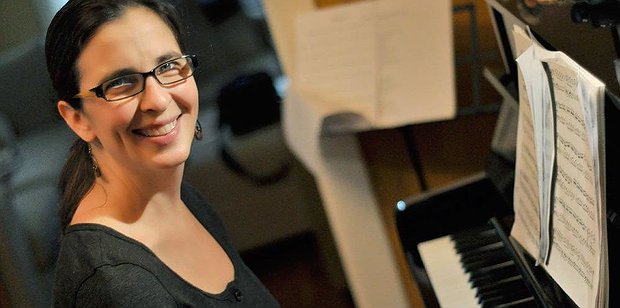
Piano lessons for adults differ from piano lessons for children. Many adults think they are too old to start piano lessons. They may see young children or teenagers playing piano and think to themselves: “I'm too old to be able to play like that” or “I will never catch up.” These statements I have heard many times over my thirty-one year teaching career and ones I still hear to this very day. First and foremost, one should never compare themselves to anyone. Doing so will most likely set you up for failure before you even begin your piano lesson journey. Always worry about yourself and do not concern yourself with what others are doing. I have taught hundreds of adult piano students over my thirty-one year teaching career and have witnessed the majority of them fall in love with the piano, progress at a very good rate, and enjoy themselves immensely. The piano is a wonderful instrument that will provide many hours or years of enjoyment. Learning to play piano is really fun. You don't want to miss out on this wonderful opportunity to enrich your life! Here are some questions that will hopefully help you make a decision on how to learn piano as an adult.
Is It Ever Too Late to Learn Piano as an Adult?
The answer is no, it is not too late to learn piano as an adult. “It is never too late to start your piano lesson journey!” — John Force, BED, BMus. One of my current adult beginner piano students who is starting her third year of piano lessons with me has done extremely well and continues to progress. She is seventy-seven years old and is loving her lessons! She has enjoyed the piano repertoire I have suggested so far and has always chosen some of her own songs she wants to learn to play on the piano which has kept her interested.
What is Different About Learning Piano as an Adult?
“Learning piano as an adult can be advantageous”. — John Force, BED, BMus. Some advantages adults have when learning to play the piano later in life is focus, motivation, and purpose. Adults are usually more focused than young children. They are more mature and are used to learning new skills. Adults are usually quite motivated to learn to play the piano. For some adults, learning to play the piano may have been a life-long dream that they never had the opportunity to learn as a child, teenager, or young adult. As for purpose, self-fulfillment and enjoyment are usually at the top of an adult's list for reasons for wanting to learn to play the piano.
Some challenges adults face when learning to play the piano later in life is patience and trying to find the time to practice with a hectic schedule. Patience is a tough one. For many of us as adults we are still working on learning to be patient with ourselves and others. Finding the time to practice can be challenging for adults, especially those who have busy schedules. I have often and continue to suggest creating a piano practice schedule for adults; One that is realistic, and one that fits into their busy lives. Choosing to practice the same day and time each week is an easy way to remember to practice playing piano. Making each practice session short (approximately 15 minutes) is also a great way to be able to fit much needed piano practice into a busy schedule. As adults progress with their piano playing, I also recommend increasing the practice sessions to twice a day.
How to Start Learning Piano: Your First Steps
Choosing an instrument is the first step on your piano journey. The choices are: acoustic pianos, digital pianos, or keyboards. Acoustic pianos are the best to learn on. Nothing beats the feel of a real piano. That being said, acoustic pianos are big and loud and may take up too much living space or cause too much noise. For these reasons, a digital piano is a popular choice. Digital pianos are smaller than acoustic pianos and you can control the volume or use headphones when playing. Keyboards are the worst of the three options. They are the smallest which in some cases is a good thing in terms of space. The small size also means that they have less keys (32, 49, or 61 keys) than an acoustic piano (88 keys) or a digital piano (88 keys).
The next step for your piano playing journey is to practice good posture and to familiarize yourself with the keyboard layout. Make sure you sit up straight with your feet flat on the floor and your arms relaxed. Once you are in a good position look at the black keys and find a group of two black keys located in the middle of the keyboard. Press and play the white key just to the left of that two-black-key group which is the note 'C'. Use your right-hand thumb (first finger number one) to press the key 'C'. Then try this with your left-hand thumb.
Next is to learn and memorize the seven letters of the musical alphabet (A B C D E F G) and familiarize yourself with fingering. Piano students need to understand fingering since finger markings appear on almost any piece of music in the score. Here I get students to label each of their fingers on both hands: thumb 1, index 2, middle 3, ring 4, pinky 5.
In terms of getting started with actually playing the piano, it is always recommended to start with scales. I usually start right off with the C major penta scale (C D E F G). Here, I get piano students to play the white keys only by using all five fingers of the right hand playing this scale in order: C (thumb), D (index finger), E (middle finger), F (ring finger), G (pinky finger). We then use the left hand to play C (pinky finger), D (ring finger), E (middle finger), F (index finger), G (thumb).
After the C major penta scale has been learned and memorized, I always teach beginner piano students chords such as the C major triad (C E G) using the thumb, middle finger, and pinky finger on both hands. If an adult beginner piano student struggles with triads then I will in some instances
start by teaching them dyads (perfect fifths) first. Initially, it all depends on how a student handles the triads.
How Long Does it Take to Learn Piano?
Learning piano as an adult can take months or years. It all depends on what you want to achieve in your adult piano lessons. Most adults can learn a short song in two or three lessons. For some adults it takes longer to learn to play a complete song. It all depends on the individual.
The Most Common Mistakes Adult Beginners Make
Rushing the Speed: When learning piano as an adult, one of the most common mistakes I see adult beginners make is playing too fast right away instead of playing slowly and then gradually increasing their speed. The brain needs time to process things. The faster you play, the easier it is to miss or skip important things such as notes, articulation, phrasing, dynamics... Rushing the tempo builds bad habits and sloppiness in playing.
Ignoring Proper Fingering: Ignoring proper fingering is another huge mistake I see in piano lessons for adults. Randomly changing fingers makes it impossible to build reliable muscle memory or body memory. Reliability through repetition is key to learning in your adult piano lessons especially for how to start learning piano.
Tension and Poor Posture: Another common mistake I see adult beginner piano students make is tension and poor posture. Playing with tension and poor posture can lead to injury such as carpal tunnel syndrome, tendinitis, trigger finger, tenosynovitis, and/or focal dystonia. This can be avoided by sitting up straight in a relaxed position with the proper arm and hand placement. Remember, your body is your instrument so take care of it!
Inconsistent Practice: Doing extra long practice sessions once or twice a week can lead to physical pain and may impair memory retention from playing too long. Too avoid possible pain and loss of memory keep your practice sessions short (15 to 20 minutes in length). This will help you stay focused and the short practice sessions will be physically easier on your body.
Playing Hands Together Too Soon: Trying to play piano with both hands initially can lead to confusion and frustration. Each hand should know it's part before trying to put it all together. Piano is difficult enough without making it harder on ourselves.
Over-using the Damper or Sustain Pedal: Using the damper or sustain pedal too often can easily mask or hide uneven notes creating thick and muddy transitions instead of clean finger control. I have found that waiting to introduce the damper or sustain pedal until a later time has made a real difference in clean finger control with my adult beginner piano students in how to start learning piano.
Trying to Learn Difficult Piano Pieces Too Early On: Trying how to learn piano as an adult is difficult enough especially if the adult piano student does not have a solid technical foundation. There are reasons piano songs have different levels of difficulty. As adult piano students progress with their techniques they are slowly able to tackle more challenging piano pieces. Playing a piano song that is too difficult or above a student's level of training can once again lead to confusion and frustration and possibly physical injury.
Learning Piano on Your Own vs. Taking Piano Lessons in Toronto
You can only learn so much on your own. Youtube tutorials are fantastic since they make learning easy and fun but without the proper guidance and personal live feedback each student gets in a piano lesson you may lose your sense of direction and become frustrated or even develop poor playing habits that can lead to sloppy technique and injury. At Neighbour Note, we offer a variety of lesson options including in-studio, in-home, or online for a multitude of instruments. Our Toronto piano teachers are highly qualified, professional, and friendly. Our rates for Toronto piano lessons are extremely competitive and affordable. Our students love us! Here is what some of our students are saying about Neighbour Note:
Try piano lessons in Toronto with Neighbour Note today. You will not be disappointed!
Frequently Asked Questions
Can you learn piano as an adult?
Yes, adults can absolutely learn piano at any age. Many students begin with no previous musical experience and make steady progress through regular lessons and consistent practice. Learning as an adult allows you to move at your own pace while focusing on the music and skills that matter most to you.
Is it too late to learn piano at 40 or older?
No, it is never too late to learn piano. Many adults in their 40s, 50s, 60s, and beyond successfully develop strong playing skills while enjoying the personal satisfaction that comes with learning a new instrument. Adults often progress efficiently because they are motivated, focused, and understand the value of consistent practice.
Is piano hard to learn for adults?
Piano is very approachable for adult beginners. The basics, such as reading simple music, playing melodies, and using both hands together, can be learned fairly quickly. More advanced techniques require time and patience, but regular practice and quality instruction help students build confidence step by step.
How long does it take to learn piano as an adult?
Most adults can play simple songs within the first few months of regular practice. Building solid technique and reading music comfortably usually takes several months, while reaching more advanced levels depends on your goals, lesson frequency, and practice routine. Consistency is the biggest factor in long-term progress.
How much should an adult practise piano?
Short, consistent practice sessions are the most effective. Practising for 15 to 30 minutes most days helps improve technique, strengthen muscle memory, and build confidence without becoming overwhelming. As your skills grow, you can gradually increase your practice time to match your musical goals.
Do I need a real piano to start, or is a keyboard fine?
A digital piano or weighted keyboard is an excellent way to begin learning. Modern digital instruments provide a realistic playing experience, require little maintenance, and are often more practical for beginners. They also have volume controls and the ability to use headphones making them a quieter option than a real acoustic piano. While an acoustic piano offers its own unique feel and sound, it is not necessary for starting lessons or making steady progress.