


Beginner Guitar Lessons in Toronto: What Really Happens in Your First 10 Lessons
categories
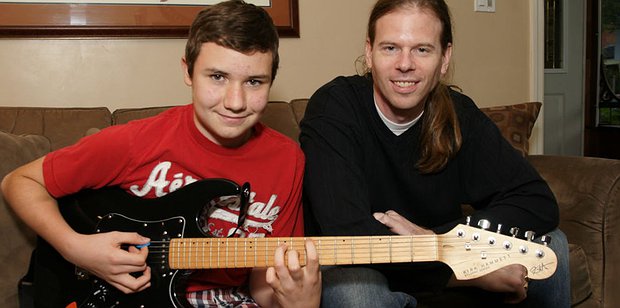
Many students feel nervous when they start beginner guitar lessons in Toronto. They are uncertain and don't know what to expect. Rest assured, at Neighbour Note we provide all students with stress-free guitar lessons in Toronto. I am here to give you a walk-through of what could happen in your first ten guitar lessons Toronto so you can have an idea of what to expect and experience in your guitar lessons. This walk-through comes from our experienced guitar teachers including my self. “I have been teaching guitar since 1995 and continue to do so every week”. - John Force, BED., BMus. I have experienced a great deal of things from correcting poor guitar technique to witnessing a student fall in love learning to play guitar. I have a great deal of experience teaching beginner guitar lessons and intermediate guitar lessons to children and adults alike over the years and this includes: acoustic guitar, electric guitar, and classical or Spanish guitar. Let me begin our walk-through so you can see where our music lessons in Toronto can take you!
Is Guitar Hard to Learn for Beginners?
The short answer is yes. Guitar lessons for beginners can be daunting and difficult, especially the physicality of playing guitar. “There are so many things to focus on when you start your guitar lessons: proper posture, developing good technique to avoid injury, choosing music you want to learn are just some of the areas that need to be addressed early on”. - John Force, BEd., BMus. Many of our guitar teachers at our music school in Toronto have noticed that when you start with the end in mind you can usually set guitar students up for success. Starting with music that a student likes to listen to is a must. This not only motivates the student but also gives the guitar lessons direction. Since learning beginner guitar is so physically challenging it is a good idea to start your first guitar lesson with beginner bass lines, simple melodies and scales for melody, and power chords and basic triads for harmony. For the most part, the majority of guitar students are physically strong enough to play these musical building blocks and this in turn develops a solid musical foundation for how to play guitar for beginners. The most important thing to remember for most beginners who want to learn guitar is patience.
You absolutely must learn to develop patience when learning guitar lessons for beginners. Students are going to have sore fingertips when they learn guitar. That is a given. Playing a stringed instrument is physically demanding. Here it is important for students to briefly stop playing and take a short break when they get sore. Changing from chord to chord in a progression is also quite challenging physically. For this reason, many of our guitar teachers recommend starting with only a two-chord chord progression and then move on to a three-chord chord progression and then a four-chord chord progression for beginner guitar lessons. Just remember to be patient when learning how to play guitar for beginners. Go slowly and take numerous short breaks. This will usually set you up for success.
What Really Happens in Your First Ten Lessons?
Lesson One: For Those About to Rock!
As an experienced guitar teacher in Toronto, I like to start teaching my first guitar lesson with popular bass lines, melodies and power chords. Here students learn how to read guitar tablature by playing actual music!
This is an extremely fun lesson for acoustic guitar, electric guitar, and classical guitar or Spanish guitar. I switch things up moving from single strings to double stops, melody to harmony and back again, always keeping things eclectic, engaging, and fun!
I always let students choose the music they want to learn by having them create a set list of songs they want to perform. This often leads the guitar lessons in a specific direction or directions. It also gives the student a sense of importance and that they have a say in what they are learning.
The final part of the first lesson is to help the student create a realistic practice schedule, one that fits into their lifestyle. Here we plan out what to practice, for how long, and how many times to practice each day in the week.
Lesson Two: You Survived the First Lesson!
The second guitar lesson is just as important as the first. Here our guitar teachers (including myself) go over the practice schedule with each guitar student to see if they actually practised and how it felt practising and playing. Once that is done we get into playing what was taught in the first lesson and feedback is given. After that, students can then be introduced to full open chords. The 'Em' chord is a great place to start as well as the 'D6/9/F#'. Here guitar students can practice switching between both chords and do a simple variation of America's song 'A Horse With No Name'.
Lesson Three: Good for You!
Now is a good opportunity to learn some new open chords. I like to introduce the 'G' chord and the 'D' chord. I then get students to practice switching from 'Em' to 'G' and then 'G' to 'D'. This helps guitar students learn basic chord progressions that many popular songs are based on. I also like to introduce the open 'G/EM' pentatonic scale at this point. This is a great scale to learn since many songs are based on it and it is an excellent place to introduce improvisation.
Lesson Four: You're on Your Way
By this time students should be working on perfecting at least one beginner song. It all depends on the student. Everyone progresses differently. Here it is extremely important to always remain patient with a guitar student. If they haven't perfected a song by now that's okay. They will get there soon enough. In some cases, some beginner guitar students will have already polished their first song! Polishing or perfecting a song should be the primary focus of this guitar lesson.
Lesson Five: You're Halfway There
The fifth guitar lesson is a great time to introduce students to the partial barre which is not only a prelude to barre chords but also to lead guitar techniques such as the double-stop.
At this point, students should be strong enough to receive this physical challenge. Partial barres are very difficult to play for beginners and are usually quite awkward for them to play. Here it is extremely important to encourage the beginner guitar student since they will most likely fail on their first few attempts. It's also a good time to introduce some basic guitar techniques such as the single string chromatic pattern. In this lesson all beginner guitar students should also be reviewing old material and learning new material as well.
Lesson Six: Keep Going!
For the sixth guitar lesson I like to introduce a bunch more chords such as the 'C', 'A', and 'E' chords. By this time students have gotten use to playing some open chords and basic chord progressions. Using these new chords in combination with previous chords that were learned, I then introduce a couple new chord progressions for students to play. Here is also a great time to introduce the movable power chord (P5). Guitar students can practice moving this chord shape up and down the guitar neck.
Lesson Seven: Keep On Rocking!
After getting used to moving the P5 power chord shape around, guitar students can then learn a massive amount of rhythm guitar songs. Here, guitar students can choose some of their favourite rock songs to play using this chord shape. I also like to introduce the first of five movable pentatonic scale shapes or patterns.
Lesson Eight: Now You Got It!
In this guitar lesson I like to introduce students to more minor chords such as the 'Am', 'Gm', and 'Dm'. Here we can learn more interesting chord progressions with these new chords. I also like to teach guitar students the first string root movable triad and then the full barre chord: First Formation, also known as the partial 'E' chord shape. New songs continued to be taught as well.
Lesson Nine: You're So Close
Now is a good time to polish more songs that you have been working on. It's also a great time for guitar students to learn the second of five movable pentatonic scale patterns. At this time guitar students should be getting used to playing the first movable pentatonic scale pattern so now is the time to learn some articulation and phrasing with pattern one. I like to start by improvising with the Albert box shape within movable pentatonic pattern one. Here students can learn to play some slurs such as the slide, hammer-on and pull-off while playing inside the Albert box shape. You can even play some double-stops here.
Lesson Ten: You Did It!
Congratulations! You made it through ten different guitar lessons. For this lesson I like to introduce two more barre chords from first formation: First Form Minor and First Form Seventh (partial 'E' chord shapes). Here students are to memorize the natural note names on the first thin 'E' string and then play First Form Major, Minor, and Seventh chord shapes with these natural notes. Sharps and flats can also be introduced and students can then test their knowledge by having the teacher choose first formation barre chords for the guitar student to play. At this time students should be able to play a bunch of songs and create their first set list! This is an exciting lesson since students can showcase what they have learned over a ten-week period.
How Long Does It Take To Learn Guitar?
I get asked this question quite a lot. Here, it depends entirely on the individual. Everyone progresses at different rates. Learning guitar can be a life-long journey so it depends on what the guitar student wants to achieve. For most guitar students, I would say it should take two or three lessons to learn a short beginner song on the guitar and three lessons to learn your first chord progression. It should also only take three or four guitar lessons to learn your first scale.
Acoustic or Electric: Which Should a Beginner Start On?
For guitar lessons in Toronto our guitar teachers often recommend starting with acoustic guitar. This is usually a more affordable option since guitarists won't need to buy a guitar amplifier. Acoustic guitars are slightly more difficult to learn on than electric guitars and this usually means guitar students will build up hand strength at a faster rate.
That being said, for some guitar students the allure of the electric guitar is too great. Electric guitars are way cooler looking than acoustic guitars. They are physically easier to play than acoustic guitars. Electric guitars require guitar amplifiers that allow guitar students to use headphones making this the quietest option. Ultimately, choosing a guitar to start on should be determined by the guitar student's musical interests.
Common Mistakes New Guitar Players Make
The biggest mistake I see a new guitar player make is technique and posture. Many students have difficulty holding the guitar and playing it with proper technique. This has to do with the correct arching of the wrist, placement of the thumb and fingers that is required for playing guitar. The good news is that with the right guitar teacher in Toronto, students can learn proper technique right from the start.
Another common mistake I see a new guitar player make is trying to play songs and guitar solos that are above their current skill level. This can lead to injury if the guitarist is not careful and should be avoided. Again, an experienced, well educated guitar teacher can help guide new guitarists and set them up for success.
Starting Guitar Lessons in Toronto
Three Different Formats:
There are three different formats for starting guitar lessons in Toronto: At a music studio, at a student's home, or online. Chose a guitar lesson format that works for you or your family, one that fits with your busy lifestyle and one that meets your needs.
Choose the Right Teacher or Music School:
Choosing the right guitar teacher for guitar lessons in Toronto or the right music school in Toronto can be tricky. Always check to see if a music school lists their teachers biographies and read them! Make sure that the guitar teacher in Toronto you choose is experienced and educated. This usually ensures that the guitar lessons will be of the highest quality. The last thing you want is an inexperienced, uneducated guitar teacher fumbling around trying to teach you songs you want to play.
At Neighbour Note our guitar teachers are top-notch! Many have completed a PhD or DMA in music and have been teaching for many years. Two of our teachers have won Juno Awards and a third was nominated for a Juno Award. Some of our guitar teachers have guitar method publications.
Check Guitar Lesson Rates:
Always shop around and compare prices. Often, the cheapest price is not the best option, since many inexperienced guitar teachers have cheap guitar lesson rates. Sometimes the most expensive option is not a good choice either. Some guitar teachers overcharge for their guitar lessons in Toronto based on their actual teaching experience and education. You should look for an amazing Toronto guitar teacher or Toronto music school that has competitive rates, that way you are getting a great guitar teacher for a reasonable price. At Neighbour Note, our lesson rates are competitive and affordable. Our guitar teachers really are the best in Toronto!
Read Reviews:
Make sure to read what people are saying about music schools in Toronto. Look for high-ranking student reviews made by actual students. Do you really want to go to a music school that has a poor reputation? At Neighbour Note, we have a great deal of five star reviews on Google Maps and other sites from many happy students. Try a guitar lesson in Toronto and see why so many families chose Neighbour Note for music lessons.
Frequently Asked Questions
Is guitar hard to learn for beginners?
No, guitar is one of the most beginner-friendly instruments. Most students can learn their first chords and play simple songs within the first few lessons. Developing smooth chord changes, rhythm, and finger strength takes consistent practice, but steady progress comes naturally with regular lessons and short practice sessions at home.
What happens in your first guitar lesson?
Your first lesson is designed to help you feel comfortable. You will learn how to hold the guitar correctly, understand the basic parts of the instrument, tune it if needed, and play your first notes or simple chords. Your teacher will also discuss your musical interests and goals so future lessons can be tailored to your experience and the style of music you want to play.
How long does it take to learn guitar?
Most beginners can play simple songs within a few weeks of regular practice. Learning the fundamentals usually takes a few months, while becoming a confident guitarist is an ongoing process that depends on practice, lesson frequency, and personal goals. Consistency is far more important than practising for long periods.
Should a beginner start on acoustic or electric guitar?
Both are excellent choices for beginners. Acoustic guitars are portable, require no additional equipment, and help build finger strength. Electric guitars are often easier to press, making them more comfortable for some beginners. The best choice is the instrument that suits the music you enjoy and motivates you to practise regularly.
How often should a beginner practise guitar?
Regular practice is more effective than occasional long sessions. Practising for 10 to 20 minutes most days helps build muscle memory, improves coordination, and keeps learning enjoyable. As your skills develop, you can gradually increase your practice time to match your goals.
Do I need my own guitar to start lessons?
Having your own guitar is recommended because regular practice between lessons is essential for progress. However, you do not need an expensive instrument to get started. A good-quality beginner guitar is more than enough, and your teacher can help you choose an instrument that fits your budget and learning goals. For some, renting a guitar is also an inexpensive option.